
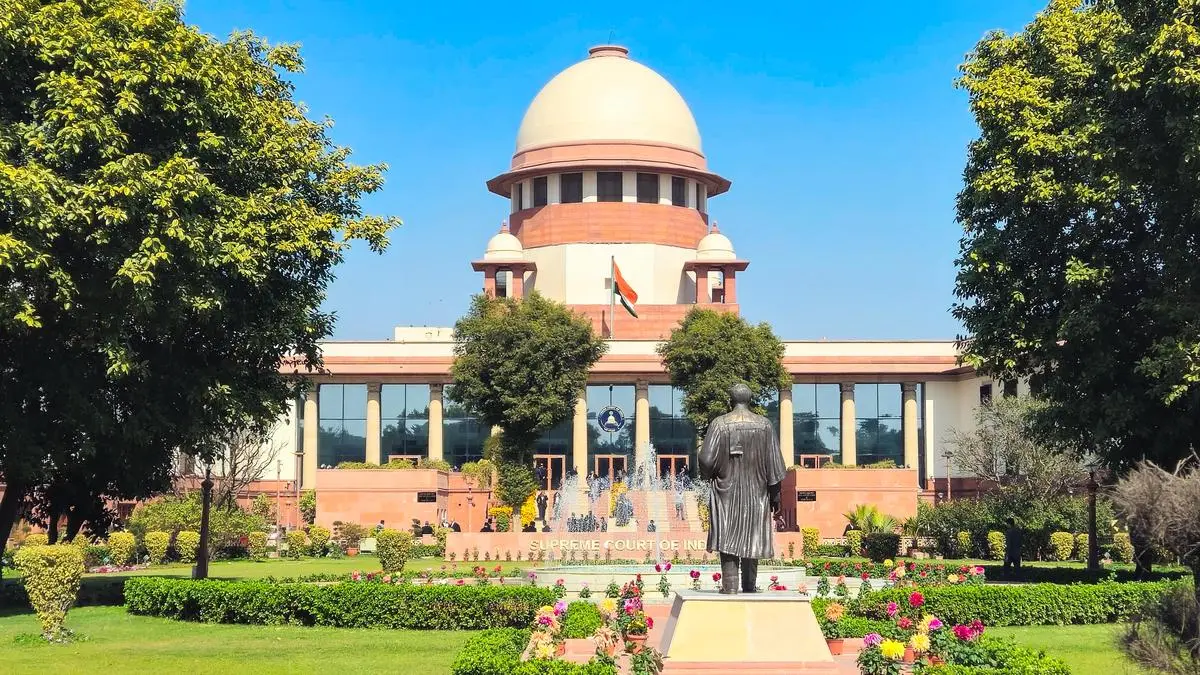
New Delhi: The Supreme Court has refused to entertain a Public Interest Litigation challenging key provisions of the Scheduled Castes and Scheduled Tribes (Prevention of Atrocities) Act, 1989. The petition questioned provisions relating to the registration of FIRs, arrest and anticipatory bail, arguing that the stringent framework could potentially be misused against accused persons.
A three-judge bench headed by Chief Justice of India Surya Kant and comprising Justice Joymalya Bagchi and Justice V. Mohana declined to reconsider the constitutional validity of the provisions. The court noted that adequate safeguards against possible misuse had already been laid down in its earlier judgments, particularly the 2020 decision in Prathvi Raj Chauhan v. Union of India.
What Was the Petitioner’s Argument?
The petition was filed by Brijbhushan Saini along with other petitioners. Appearing for the petitioners, advocate Vishnu Shankar Jain argued that some provisions of the SC/ST Act could cause difficulties for accused persons because an FIR can be registered without a preliminary inquiry in cases covered by the Act.
The petitioners also raised concerns over the restrictions on anticipatory bail under Sections 18 and 18A. According to their argument, the absence of a preliminary inquiry and restrictions on anticipatory bail could increase the possibility of misuse of the law.
The petitioners further questioned the 2018 amendments that restored stringent provisions relating to arrest and FIR registration. They argued that the changes could affect procedural safeguards available to an accused under ordinary criminal law.
Supreme Court Points to Existing Safeguards
The Supreme Court declined to revisit the issue, pointing to the safeguards established in its 2020 judgment.
In Prathvi Raj Chauhan, the court had upheld the validity of the 2018 amendments while clarifying that constitutional courts could intervene in appropriate cases. The Supreme Court has also subsequently dealt with the scope of the restrictions on anticipatory bail under the Act.
The court has made it clear that the mere invocation of the SC/ST Act does not automatically prevent a court from examining whether a prima facie offence is disclosed. In cases where the basic ingredients of an offence are not made out, judicial remedies remain available.
The bench also observed that allegations of misuse in individual cases can be examined separately and cannot, by themselves, form the basis for questioning the constitutional validity of the legislation.
What About Anticipatory Bail?
One of the major issues raised in the petition concerned the restriction on anticipatory bail under Section 18 of the SC/ST Act.
The law generally places restrictions on anticipatory bail for offences under the Act. However, Supreme Court rulings have clarified that courts can examine whether a prima facie case exists. If the allegations do not disclose the commission of an offence under the Act, the statutory bar may not operate in the same manner.
The Supreme Court’s approach therefore does not mean that every accused person is automatically denied all judicial remedies. The safeguards developed through judicial decisions continue to apply in appropriate circumstances.
Dispute Over Compensation Provision
During the hearing, the petitioner’s counsel also raised questions regarding compensation paid to complainants under the SC/ST Act framework. The counsel referred to a figure of around ₹493 crore and argued that such payments could potentially encourage false complaints.
Justice Joymalya Bagchi objected to this line of argument, reportedly describing the submission as “cruel.” The exchange formed part of the broader discussion over the purpose of the law and the safeguards available to accused persons.
Why Was the 2018 Amendment Important?
The controversy surrounding these provisions dates back to a 2018 Supreme Court judgment in the Subhash Kashinath Mahajan case.
In that case, the Supreme Court had introduced certain safeguards concerning arrests and preliminary inquiries in SC/ST Act cases. Among other things, the judgment discussed the need for preliminary inquiry in certain circumstances and approval before arrest.
The judgment faced significant opposition, after which Parliament amended the SC/ST Act in 2018. Section 18A was introduced, making it clear that a preliminary inquiry was not necessary before registration of an FIR under the Act and that prior approval was not required for arrest where the Act applied.
Supreme Court Had Already Upheld the Changes in 2020
The constitutional validity of the 2018 amendments was subsequently challenged before the Supreme Court. In its 2020 Prathvi Raj Chauhan judgment, the court upheld the amendments while retaining judicial safeguards for exceptional cases.
The latest petition sought reconsideration of that position. However, the bench found no sufficient reason to reopen an issue that had already been examined by a larger bench and had been followed by subsequent judicial decisions.
What the Latest Order Means
The latest development does not mean that allegations of misuse can never be examined. Rather, the Supreme Court has maintained that such concerns can be considered on a case-by-case basis through the existing judicial remedies.
The court has therefore left the existing legal framework and safeguards intact while declining to reopen the constitutional challenge to the key provisions of the SC/ST Act.
The decision keeps in place the statutory provisions concerning FIR registration, arrest and anticipatory bail, along with the safeguards that have been developed through Supreme Court judgments.
The case was filed as Brijbhushan Saini and Others v. Union of India and Others, and the petition was dismissed by the three-judge bench headed by Chief Justice Surya Kant.